
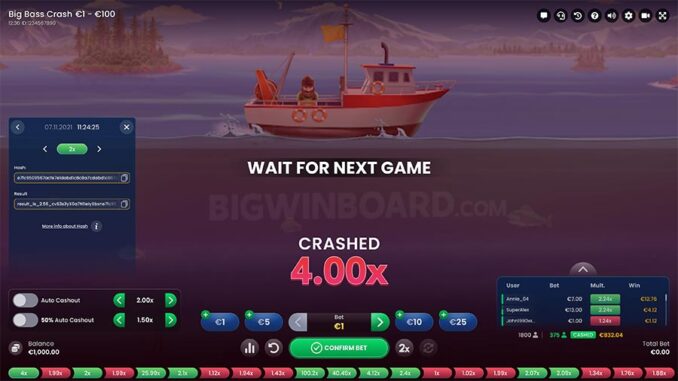
If you happen to be a UK player addicted to the high-risk thrill of Big Bass Crash, examining the inner workings at how the game is built can be pretty eye-opening. There’s more to it than just clicking a button and wishing for luck. The game functions using a clever digital framework that mixes random number generation, mathematical models, and live server processing. Getting to know this technical side allows you to look beyond the basic gameplay. You come to appreciate the detailed engineering that decides the crash point, processes your “cash out”, and aims to keep everything honest, transparent, and gripping. Let’s analyse the main parts, from the crucial Random Number Generator to the internal chat between your device and the game server that delivers each round both a surprise and seamless to play.
Game Server Logic and Predetermined Results
The RNG sets the seed of chance, but the game server is the boss that runs the show. Stored in a secure data centre, this server processes the RNG result and controls the entire round. It transmits the signal to start, triggers the climbing multiplier, and finally declares the crash. This setup is “deterministic”. The crash point is set from the very beginning, but the game displays it bit by bit to build the tension. The server also does all the important maths, determining what each player could win based on their stake and when they cash out. Having one central point of control is crucial for security. It stops any tampering from a player’s device and guarantees everyone in the same round witnesses the same game flow and result. This creates a unified, trustworthy multiplayer space.
User-Facing Interface: What Players View and Engage With
The client-side is simply the presentation layer, the polished display you see on your screen. Built with tech like HTML5 and WebGL, this interface paints the submerged environment, the rising multiplier line, and the dynamic Big Bass avatar. It gets a live data feed from the game server and turns it into the rising figures and graphics you watch. Its main job is to send your actions—placing a bet, triggering cash out—back to the server for approval. It has zero say in the game’s logic. Think of it as a very smart display terminal. This split between show and substance means the exciting visuals and sounds stay perfectly synced with the server’s central clock. You get a smooth, immersive experience that doesn’t compromise on fairness or security.
The Multiplier Function: Mathematical Framework and Volatility
That thrilling climb of the multiplier isn’t just a straight line. It follows a specific mathematical model. This model determines the game’s volatility, its risk profile. It controls how often and where the game might crash. A high-volatility model could result in more frequent low multipliers, but with the chance of a rare, sky-high crash. A lower volatility model might dish out more consistent, mid-range multipliers. The exact algorithm shapes the curve’s shape and the odds of a crash at any moment. For UK players, the takeaway is this: the model is a fixed, audited piece of the game’s code. It outlines the built-in risk and reward, so players who think strategically can optimize their cash-out timing based on the game’s statistical personality over hundreds of rounds.
Network Architecture: Real-Time Data and Server Communication
Live excitement of Big Bass Crash requires a solid network to make it work. Fast connections, typically using WebSocket protocol, maintain a constant two-way link established between your device and the core game server. This allows the multiplier value flow to you instantly and sends your cash-out command directly back. Your personal internet connection plays a role. A poor or patchy connection can lead to a lag separating what the server knows and what you observe, which might cause you to miss your cash-out window. The system is constructed to be resilient, but a stable connection is your best choice. It ensures your actions get to the server and are confirmed without a frustrating delay, keeping the gameplay responsive.
Security Protocols: Guaranteeing Fairness and Data Security
Security isn’t an extra feature; it’s woven into the game’s very structure. Beyond the RNG certification process, the framework uses several layers of protection. Every piece of data traveling to and from the server is secured with standards including TLS, maintaining your personal and payment details secure. The game server runs in a secure environment with tight access controls and intrusion detection systems. Many versions also use a provably fair mechanism. This gives technically minded players the ability to confirm, using cryptographic seeds, that the game round’s result was generated fairly and never changed. For UK players, these measures show a genuine commitment to protection. This helps the game title meet the UK’s Data Protection Act and the stringent safety requirements imposed by the UKGC.
Sound and Visual Engine: Building Immersion
An immersive, underwater theme of Big Bass Crash stems from a purpose-built sound and graphics engine https://bigbasscrash.uk/. This section of the machine works with the game server to activate specific visuals and sounds at the perfect moment—the water bubbles, the suspenseful music as the line climbs, the splash and snap of the crash. These audio and visual files are kept and delivered smoothly to bypass long loading screens without losing quality. The engine’s job is to weave a sensory experience that pumps up the anticipation. For you, this layer is what converts a maths-based betting game into a true spectacle. The architecture ensures this feeling is the identical whether you’re on a phone, a tablet, or a desktop computer.
Backend Systems: User Accounts, Wallet, and Transaction Handling
Behind the flashy game screen, a separate backend system oversees everything that isn’t pure gameplay. It manages player account details, stores encrypted wallet balances, and handles your deposits and withdrawals. When you place a bet, this system instantly reserves those funds from your wallet. If you withdraw successfully, it calculates your winnings and appends them to your balance, all while maintaining a precise record of every transaction. This system connects with different payment gateways to enable popular UK options like debit cards and e-wallets. Its trustworthiness and accuracy are absolutely critical. It manages sensitive money operations and ensures your balance is always correct, establishing the trustworthy financial backbone of your entire experience.
Mobile vs. Desktop: Architectural Adaptations for Multiple Systems
The essential game—the mechanics and the random number generator—doesn’t change in any way whether you play on a smartphone, a slate, or a desktop. But the way it’s presented to you changes. On a phone, the layout is tweaked for touch interfaces, smaller screens, and at times weak network connections. The imagery might use dynamic streaming to maintain smoothness. The interface is often “responsive”, meaning it rearranges the layout and control sizes to suit your screen. Data exchange with the server is also optimized to be kinder on data usage and battery life. For players in the UK on the road, this translates to you experience the same fair, server-driven game, just presented for your gadget. The aim is a uniform Big Bass Crash gameplay across all your gadgets, with no reduction in safety or fairness.
The Central Mechanism: Random Number Generator (RNG) Unpacked
The Random Number Generator (RNG) is the indispensable centrepiece of Big Bass Crash. Consider it a certified, digital deck of cards being shuffled forever. This complex algorithm spits out results that are entirely unforeseen and in no set order. It establishes the exact multiplier where the game will crash each round. The moment a round starts, the RNG selects a crash point from a huge range of possibilities and locks it in with cryptographic security. This is the crucial part for UK players: this happens in an instant and cannot be altered. Nothing you do after the round begins can change that pre-set outcome. Independent testing labs audit this RNG regularly. Their audits attest to its fairness and that it meets UKGC standards, so every player has the same random shot at success on every single climb.
